


A single post can convince thousands of people that free money is coming their way. That is exactly what happened with the so-called Rumored $697 Direct Deposit Payment — a claim that spread rapidly across TikTok, Facebook, and online forums, leaving many people genuinely confused about whether they were missing out on a government benefit. Understanding how solo et financial schemes and viral money rumors operate is the first step toward protecting yourself.
If you have seen posts about this payment and wondered whether it is real, you are not alone. This article breaks down where the rumor came from, why it spread so fast, and what you should actually do if you are looking for legitimate financial assistance.
What Is the Rumored $697 Direct Deposit Payment?
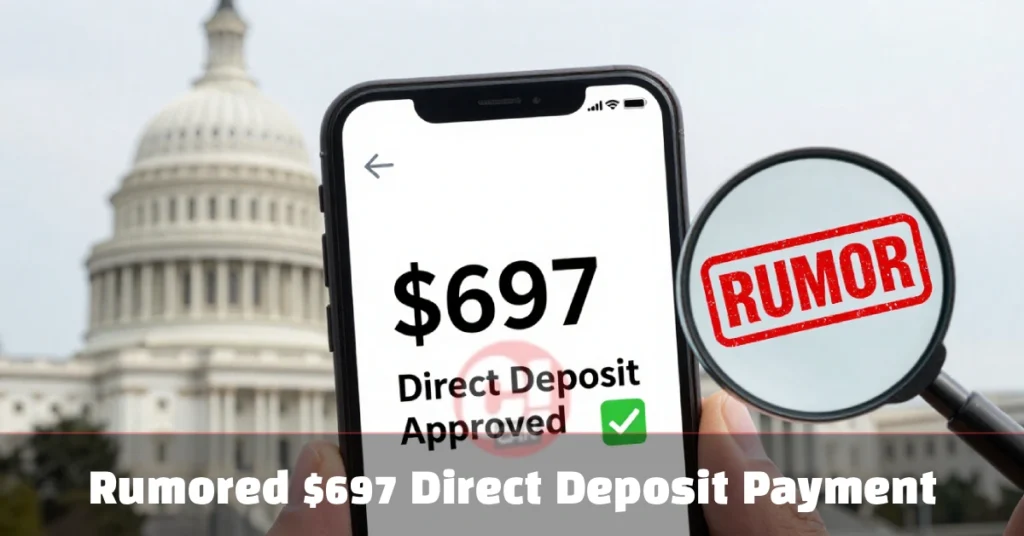
The claim is straightforward: a $697 payment is supposedly being deposited directly into Americans’ bank accounts through some form of government program. Posts about it use language that sounds official — “relief funds,” “eligibility update,” “payment approved” — without ever naming a specific agency or linking to a government website.
Here’s the catch. No federal agency, including the IRS, Social Security Administration, or the Department of the Treasury, has announced any program issuing a $697 direct deposit to the general public. The amount does not match any known tax credit structure, Social Security adjustment, or state-level benefit program that is currently active.
That does not mean the people sharing it are all trying to deceive you. Many are simply passing along something they saw and found convincing. But the source? Almost always untraceable.
Why This Specific Number Feels So Believable
The $697 figure is not random — it is strategic. Round numbers like $500 or $1,000 feel made-up. But $697 sounds as if it came from an actual payment formula, the kind governments use when they calculate benefits based on income brackets, family size, or cost-of-living adjustments.
This is a well-documented psychological trick. People are more likely to trust precise figures because they suggest data, calculation, and official process behind them. A rumor that says “you might get some money” gets ignored. A rumor that says “$697 has been approved for your account” feels like something you need to act on immediately.
Scammers and clickbait creators understand this. They attach specific numbers to vague claims because it lowers your skepticism at the exact moment you should be raising it.
How the Rumor Spread So Quickly
Social media algorithms reward engagement, not accuracy. A post promising $697 in free money will naturally generate more clicks, shares, and comments than a post explaining the federal budget. Once the engagement starts, the platform pushes it to more users — and suddenly a fabricated claim reaches millions of people who had no idea it existed an hour ago.
The $697 rumor also benefited from timing. It surfaced during a period when many Americans were still thinking about stimulus checks, pandemic-era relief payments, and rising costs of living. People were already conditioned to believe that unexpected government deposits were possible because they had happened before. That memory made the new claim easier to accept.
Tracking how misinformation spreads often requires the kind of analytical tools used in software tracking and digital behavior monitoring — the same methods researchers use to map viral content across platforms. By the time corrections or fact-checks appeared, the original rumor had already reached far more people.
Legitimate Programs That May Have Fueled the Confusion
Part of the reason this rumor has staying power is that real financial assistance programs do exist — and they do sometimes issue payments that people did not expect or actively apply for.
SNAP and food assistance adjustments, state-level utility relief programs, tax refund timing, and Social Security cost-of-living increases all result in real direct deposits. If someone received an unexpected deposit around the time the $697 rumor was circulating, they may have assumed the two were connected and posted about it, adding more fuel.
It is also worth noting that some people genuinely have unclaimed money sitting with state governments or the IRS. These are real, verifiable programs. But they are accessed through official portals like MissingMoney.com or your state treasury’s website — not through clicking a link in a social media post.
Red Flags to Watch For With Any Payment Claim
The $697 payment rumor follows a very predictable pattern. Once you know what to look for, these claims become much easier to spot.
No named agency or program. Legitimate payments always come from an identifiable source — the IRS, SSA, or your state’s Department of Revenue. If a post does not name the specific program and agency, that is a problem.
Urgency language. “Claim before the deadline,” “funds expire soon,” “limited-time offer” — real government programs do not work this way. They publish eligibility windows publicly, well in advance.
A link that is not a .gov address. If someone asks you to verify your eligibility through a non-government website, especially one that asks for your Social Security number or banking details, stop immediately.
Vague eligibility. Real programs define who qualifies. If the post says “all Americans may be eligible” without further detail, that is a sign the claim is designed to appeal broadly rather than inform accurately.
What to Do If You Are Looking for Real Financial Help
If you are actually in a tight financial spot and hoping for assistance, there are concrete places to look — and none of them require clicking a sketchy link.
The IRS Free File program can help you claim tax credits you may have missed, including the Earned Income Tax Credit, which can result in significant refunds for lower-income households. The Benefits.gov portal lists every federal assistance program with clear eligibility criteria. Your state’s social services department is another reliable starting point for local aid.
If you believe you have unclaimed money — from a past employer, old bank account, or government refund — use USA.gov/unclaimed-money to search through official state and federal databases.
The Real Cost of Believing Financial Rumors
When people expect money that never arrives, they make decisions based on false information. Bills go unpaid because a deposit is “coming.” Purchases get made on credit because a payment is “already approved.” That gap between expectation and reality has a real financial cost. Financial advisors like Melanie at CraigScottCapital consistently point out that viral money rumors cause measurable harm to household budgets — especially among people who are already financially stretched.
Beyond individual harm, widespread financial misinformation erodes public trust in actual relief programs. When a genuine assistance initiative launches, people are less likely to engage because they have been burned by rumors before.
The rumored $697 direct deposit payment is a clear example of how specific language and familiar framing can make a completely unverified claim feel credible. The best protection is simple: before you believe it or share it, find the .gov source. If it does not exist, the payment probably does not either.