



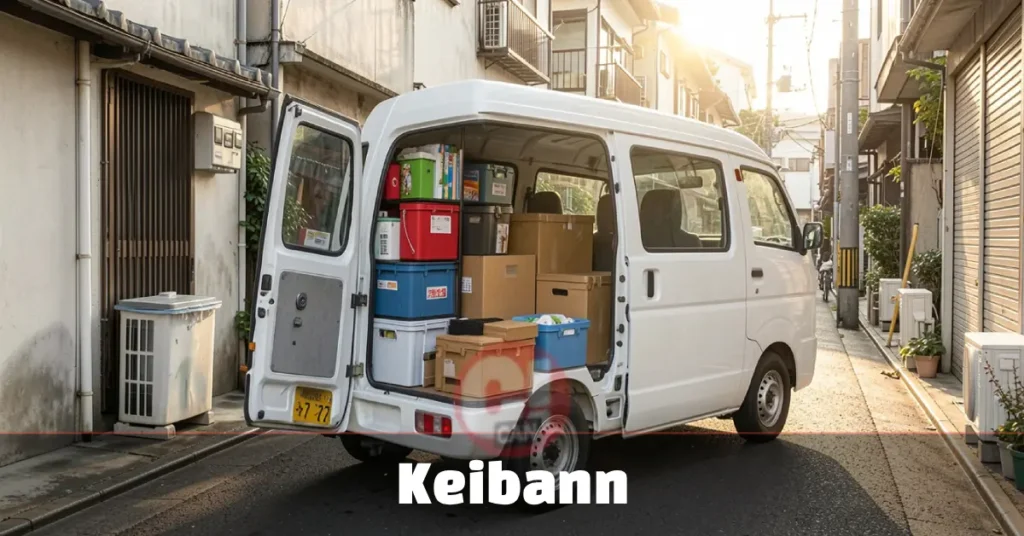
A keibann van is a compact Japanese commercial vehicle built under Japan’s kei vehicle regulations. The word combines “kei” (light) and “ban” (van). These vans run on 660cc engines, deliver 40–50 MPG, and are built for tight city streets. They are widely used for last-mile delivery, mobile services, and small business logistics.
Running a delivery business in a crowded city is expensive — fuel, parking tickets, and maintenance costs pile up fast. Most business owners assume they need a full-size cargo van to get the job done. But there’s a vehicle class that Japan built specifically to solve this problem, and it’s been doing it for over 70 years.
Keibann vans are compact, fuel-sipping commercial vehicles that fit where larger vans simply cannot go. Whether you run a package delivery route, a mobile repair service, or a food operation, keibann vans are worth understanding. This guide covers what they are, why small businesses use them, which models matter, what the real limitations are, and what you need to know before buying one.
What Exactly Is a Keibann Van?
The word “keibann” comes from two Japanese terms: kei, meaning light, and ban, referring to the van body style. These vehicles fall under Japan’s kei-jidosha classification — a government-regulated vehicle category created after World War II to give businesses affordable transportation during Japan’s economic recovery.
The Japanese government made the deal simple: build smaller, and you pay less. Owners of kei vehicles received lower taxes, cheaper insurance, and easier registration. Manufacturers responded with purpose-built vehicles, and kei vans became the backbone of Japan’s urban delivery networks.
Today, a keibann van is defined by strict specifications: engine size stays under 660cc, length sits around 3.4 meters, and width stays under 1.48 meters. Those dimensions make a keibann shorter than most compact sedans — yet the boxy, vertical interior design maximizes usable cargo space in ways that surprise first-time users.
The Design Logic Behind the Size
Here’s what most people miss: keibann vans aren’t just small — they’re deliberately engineered to make the most of their dimensions. Wheels sit at the vehicle’s outer corners. The engine is compact and placed to free up interior volume. The cabin shape is square, not tapered, to allow vertical stacking.
A typical keibann can carry between 1.2 and 1.8 cubic meters of cargo and handle a payload of up to 350 kg. The Suzuki Every, one of the most common models, delivers around 47 MPG under normal urban driving conditions. That figure is roughly double what a standard cargo van achieves.
The result is a vehicle that fits in tight urban spaces, costs far less to fuel, and still moves a realistic daily delivery volume for most small businesses.
Why Small Businesses Choose Keibann
The business case for keibann vans comes down to three things: fuel cost, access, and total ownership expense.
Fuel is the obvious starting point. At 40–50 MPG versus a conventional van’s 15–25 MPG, the savings on a high-stop daily route are real and consistent. For a delivery driver making 60 stops a day in city traffic, that difference compounds every week.
Access matters more than most people anticipate. Dense neighborhoods, narrow lanes, market streets, and buildings with restricted loading zones become manageable in a keibann. Drivers park faster, get in and out of tight spots without incident, and avoid the delays that come with circling blocks in a large vehicle.
Ownership cost is where the full picture becomes clear. Keibann vans cost less to purchase outright, less to insure, and less to maintain. Their mechanical systems are straightforward — fewer complex electronics, simpler drivetrain components, and parts that are widely available and affordable.
| Feature | Keibann Van | Standard Cargo Van |
|---|---|---|
| Engine Size | Under 660cc | 2.0L – 3.5L |
| Fuel Economy | 40–50 MPG | 15–25 MPG |
| Purchase Price | Low | High |
| Urban Maneuverability | Excellent | Limited |
| Maintenance Complexity | Low | Moderate to High |
| Best Use | City delivery & mobile services | Heavy or long-distance freight |
Real Business Uses That Work
Last-mile delivery is where keibann vans perform best. The final leg of any logistics chain — from a local warehouse to a customer’s door — involves dense stops, short distances, and constant parking. Large trucks struggle in these conditions. Keibann vans are built for exactly this pattern.
Mobile service businesses — repair techs, auto detailers, equipment rental — use keibann vans to carry tools and reach job sites without the overhead of a full-size work vehicle. Customizable interiors let operators add shelving, bins, or modular storage to suit specific trades.
Food and mobile vendors find keibann vans useful for transport between a central kitchen and service locations, or for small-scale mobile setups at markets and events. The compact size opens access to venues that traditional food trucks cannot enter.
Healthcare and pharmacy logistics benefit from predictable routing and the ease of curb-side access that larger vehicles cannot match.
Popular Models Worth Knowing
Suzuki Every — The most widely imported model in markets outside Japan. Known for reliable performance, cargo flexibility, and strong used-market availability. Comes in 2WD (DE51V) and 4WD (DF51V) configurations.
Honda Acty — Built for durability and frequent short-trip use. Strong parts support and a reputation for consistent engine performance make it a solid choice for high-stop delivery routes.
Daihatsu Hijet — The most affordable entry point. Lightweight construction keeps running costs low, which makes it particularly suited to startups or budget-limited operations.
Over 80% of keibann vans imported into the US market are 4WD models, which reflects the reality that American roads and terrain often require more versatility than urban Japanese routes.
What You Need to Know Before Buying
Import rules matter. In the United States, the 25-year rule allows vehicles that are at least 25 years old to bypass federal safety and emissions standards. Most keibann vans on American roads are from the late 1990s for exactly this reason. Import costs — shipping, customs clearance, duties at roughly 2.5%, and registration — typically add $6,000 to $12,000 on top of the purchase price.
Insurance requires research. Standard commercial insurers often decline coverage for these vehicles. Specialty insurers or classic/utility vehicle classifications are the more reliable routes. Providing accurate vehicle details — mileage, use type, parking location — is non-negotiable to keep any policy valid.
Highway use is restricted. Keibann vans are not interstate vehicles. Their 660cc engines cap comfortable speeds of 65–70 MPH, and several US states have rules limiting their highway operation. They are city vehicles, secondary road vehicles, and rural route vehicles — not long-haul options.
Safety is limited by design. These are older vehicles without modern crash ratings. No airbags, no lane assist, no collision mitigation in most models. Businesses using them need clear safety protocols for drivers.
Conclusion
Keibann vans are not a compromise — they are a specific solution for a specific problem. If your business operates in an urban area, runs high-stop delivery routes, or needs a low-cost commercial vehicle for daily local use, a keibann van delivers real operational advantages that larger vehicles cannot match.
The import process takes planning, insurance requires extra work, and highway use is off the table. But for the right business in the right environment, a keibann van cuts fuel costs, improves access, and keeps ownership expenses low — consistently, every working day.
For More Visit this site: CanMagazine