

Every year, more than 2.7 million people visit the Alhambra in Granada — making it the most visited monument in Spain. That number alone tells you something. But a growing share of those visitors is no longer coming at noon. They’re coming at night, and that shift is quietly changing the financial picture of one of Europe’s most important heritage sites.
The Alhambra Night tour attendance revenue has moved from a niche offering to a core part of the site’s ticketing strategy. If you’re trying to understand how attendance translates into revenue, what the actual numbers look like, and why this matters beyond just tourism statistics, this article breaks it down clearly.
How the Alhambra Night Tour Works
The Alhambra operates separate ticketing sessions for night visits. These typically run on Friday and Saturday evenings, with seasonal extensions during the summer months when demand peaks. The Nasrid Palaces — the centerpiece of any Alhambra visit — remain the primary draw during night hours, and access to them at night is sold separately from the daytime general admission.
Each night’s session is capped at around 400 visitors. That cap is not arbitrary. The Alhambra’s management body, the Patronato de la Alhambra y Generalife, enforces strict capacity limits to protect the structural integrity of the palaces. The result is a deliberately scarce product, which has a direct effect on pricing power and perceived value.
Tickets for the Nasrid Palaces night visit are priced in the €14–€18 range, depending on the season and whether the purchase is made in advance or through third-party booking platforms. That price point sits above the daytime general admission, and the premium is widely accepted by visitors who see night access as a distinct, harder-to-get experience.
Alhambra Night Tour Attendance: What the Numbers Show
The Alhambra receives roughly 2.7 million visitors annually across all its ticketing categories. Night tour attendance represents a smaller but consistent slice of that figure. Given the 400-person cap per session and the typical schedule of two sessions per weekend (with additional dates in summer), the site runs somewhere between 300 and 400 night sessions per year.
At full capacity, that works out to approximately 120,000–160,000 night visitors per year. In practice, night sessions sell out weeks in advance during peak months, which means actual attendance regularly hits the ceiling. Sell-out rates during July and August have been reported above 95% by local travel operators in Granada.
Here’s the catch — that consistent sell-out rate is also a revenue signal. It tells the Patronato that demand exceeds supply, which is why the site has occasionally expanded the night schedule rather than raised prices dramatically. The balance between accessibility and exclusivity is managed carefully, because overexposure would erode the premium that night tours currently command.
Revenue Breakdown: Night Tours vs. Overall Alhambra Income
The Alhambra’s total annual revenue has been reported above €30 million in recent years, with ticket sales making up the dominant share. Night tours, while representing a fraction of total visitor numbers, punch above their weight in per-visitor revenue terms.
| Category | Estimated Visitors/Year | Avg. Ticket Price | Est. Revenue Contribution |
|---|---|---|---|
| Daytime General Admission | ~2.5 million | €10–€14 | ~€25–30 million |
| Night Tours (Nasrid Palaces) | ~120,000–160,000 | €14–€18 | ~€1.7–2.9 million |
| Combined Garden/Generalife Access | Included in the above | Varies | Included above |
The night tour revenue figure of roughly €1.7–2.9 million represents a meaningful contribution when you consider the limited operational hours and minimal additional infrastructure required. The palaces are already there. The lighting systems are a fixed cost. The incremental cost per night visitor is low, which means margins on night admissions are strong.
Why Demand for Night Visits Keeps Growing
Several factors drive continued growth in night tour attendance. International tourism to Spain has recovered strongly since 2022, and Granada specifically benefits from its position as a UNESCO World Heritage city with limited hotel room supply — visitors who can’t access daytime tickets often redirect to night availability.
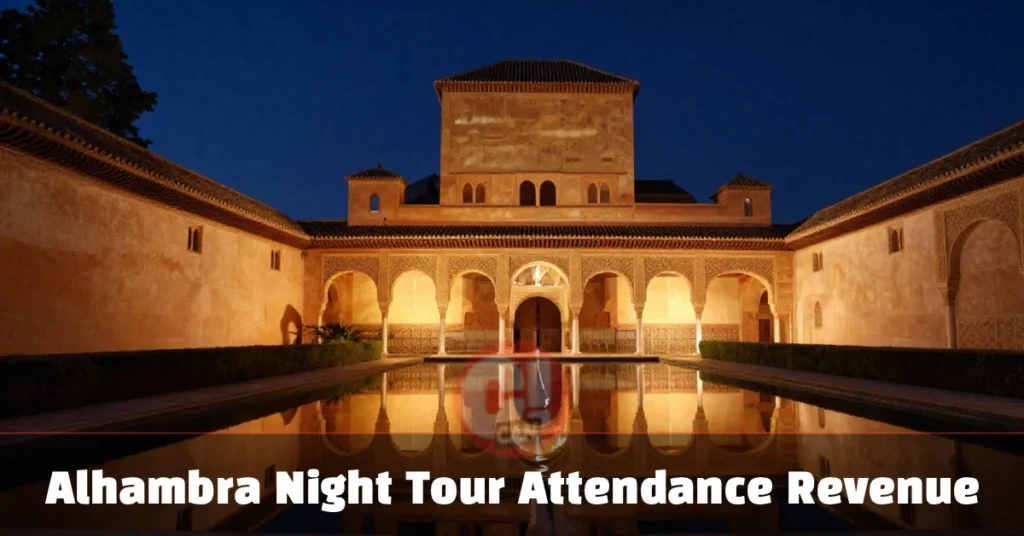
Social media visibility plays a measurable role. The Nasrid Palaces at night photograph in a way that daytime images rarely match — warm amber lighting against carved stucco, reflective pools, and near-empty corridors. That visual character circulates widely on travel platforms and consistently pushes new audiences toward searching for night access.
Booking behavior has also shifted. Visitors now arrive in Granada having pre-purchased night tickets months out, rather than trying to buy on arrival. This behavioral shift benefits the Alhambra’s revenue predictability. Cancellation rates are low because night tickets represent a deliberate, planned purchase rather than an impulse decision made at the gate.
Challenges That Cap Revenue Growth
Despite strong demand, there are real constraints on how much further night tour revenue can grow. The 400-person capacity limit is not going to increase significantly — any meaningful expansion would require environmental impact assessments and approvals that the Patronato has historically been reluctant to pursue.
Seasonal concentration is another issue. The bulk of night tour revenue is generated between May and September. Outside that window, colder temperatures and reduced daylight hours compress the viable night tour schedule. Revenue from October through March is substantially lower, and the fixed costs of operating the site don’t compress at the same rate.
Ticket scalping and third-party markup are persistent friction points. Officially, the Alhambra sells tickets through its own platform and a small number of authorized resellers. But unauthorized resale at inflated prices has been documented, which means some of the consumer’s willingness-to-pay never reaches the Patronato. This is a known issue that heritage sites across Europe struggle to address without creating barriers for legitimate advance buyers.
What This Means If You’re Planning a Visit
If you’re considering the night tour, book directly through the Alhambra’s official ticketing site (tickets.alhambra-patronato.es) as early as possible — ideally 60–90 days out during summer months. Third-party platforms charge service fees that add €5–€10 to the base ticket price without adding access or flexibility.
The night experience focuses on the Nasrid Palaces specifically. If you want to see the Alcazaba military complex, the Generalife gardens, or the Palace of Charles V, those require a separate daytime ticket. Many visitors combine both — a daytime general admission visit and a night ticket on the same day or on consecutive days.
Night tours run approximately 90 minutes. There are no dining options on-site during night sessions, so plan around that if you’re arriving directly from dinner.
The Bigger Picture on Alhambra Night Tour Attendance Revenue
The Alhambra night tour isn’t a side product — it’s a well-managed premium experience that contributes meaningfully to the site’s financial health while protecting the monument from overuse. The combination of strict capacity, premium pricing, consistent sell-out rates, and low incremental operating costs makes the night tour one of the better-structured heritage tourism models in Europe.
Alhambra night tour attendance revenue reflects something broader: that managed scarcity, when applied thoughtfully to a genuinely compelling experience, produces both financial returns and visitor satisfaction that pure volume-based models can’t match. For anyone studying heritage site economics or planning a visit to Granada, that balance is worth understanding.