

Every year, oil palm farms across Southeast Asia, West Africa, and Latin America generate millions of tonnes of shells, husks, and fiber — most of it burned in open fields or left to rot. Meanwhile, roughly 750 million people still live without reliable electricity. The Oil Palm Lamp Project sits at the intersection of these two problems and offers a practical answer to both. Experts tracking agricultural waste solutions say this kind of local-resource approach is gaining serious ground.
This article breaks down how the project works, why oil palm waste is a surprisingly capable fuel source, what communities actually gain from it, and where the concept is headed.
What the Oil Palm Lamp Project Actually Does
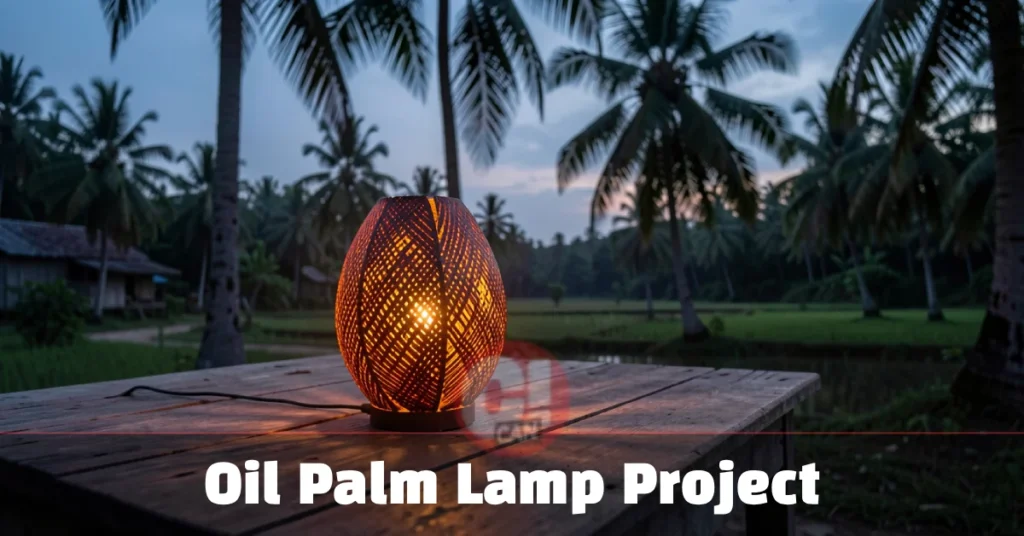
At its core, the Oil Palm Lamp Project converts agricultural byproducts from palm oil production into a usable lighting fuel. The shells and mesocarp fibers left behind after oil extraction are dense, dry, and carry significant calorific value — meaning they burn steadily and can power simple lamp designs without modification or complex processing.
The project does not require imported materials or specialized equipment. Local farmers and small manufacturers can source raw material from nearby mills, process it into lamp fuel or biochar-based wicks, and distribute finished lamps within their own communities. That local loop is the whole point. It keeps costs low, keeps money inside the community, and removes dependence on diesel or kerosene — fuels that rural households in palm-growing regions often spend a disproportionate share of their income on.
Here’s the catch most people miss: this is not a charity handout model. The Oil Palm Lamp Project is built around a small-scale production economy. Communities are producers, not just recipients.
Why Oil Palm Waste Works as a Fuel Source
Not all agricultural waste burns cleanly or consistently. What makes oil palm residue different is its physical composition. Palm shells have a high lignin content and low moisture when properly dried, which gives them a combustion profile closer to charcoal than raw biomass. Mesocarp fiber, the stringy material wrapped around the fruit, is similarly energy-dense.
When processed correctly — dried, compacted, or converted into briquettes — these materials produce a controlled, sustained flame. Some project implementations go further and use a small gasification unit to convert the solid waste into syngas, which then powers a modified lamp or generator. That method produces less particulate matter and burns more completely, reducing indoor air pollution.
Compared to kerosene lamps, which are the default in most off-grid rural homes, oil palm-fueled lamps emit lower levels of black carbon when the fuel is properly prepared. That matters for household health, not just the environment.
The Environmental Case for Repurposing Palm Waste
Open burning of oil palm waste is a common practice at many mills and smallholder farms. It is fast, cheap, and requires no equipment — but it releases CO₂, methane, and fine particulate matter in large, uncontrolled quantities. In countries like Indonesia and Malaysia, agricultural burning is a documented contributor to seasonal haze events that affect air quality across entire regions.
The Oil Palm Lamp Project addresses this directly. When waste is collected for lamp fuel production, it never reaches an open fire. The controlled combustion inside a lamp — or better yet, inside a gasifier — produces far fewer harmful byproducts per unit of energy released.
There is also a soil angle worth noting. Ash and biochar residues from palm shell combustion can be returned to farmland as a soil amendment. Biochar improves water retention and supports microbial activity, which matters in tropical soils that are prone to nutrient leaching. So the waste enters the energy system, provides light, and the residue cycles back to the farm. Researchers studying community energy models have noted that this circular flow is what separates viable long-term projects from short-lived pilots.
Who Benefits and How the Social Impact Adds Up
The most visible benefit is light after dark. But the downstream effects are where the real value accumulates.
Children in off-grid households gain additional study hours after sunset. Research consistently shows that extended study time correlates with improved literacy and school completion rates — particularly for girls, who in many palm-growing regions take on domestic work during daylight hours and have fewer hours available for education. A reliable evening light source changes that equation.
Small businesses — repair shops, food vendors, tailors — can extend operating hours into the evening without paying for diesel generator fuel. For a micro-business running on thin margins, even two additional hours of operation per day represents a meaningful increase in weekly revenue.
Women are often the primary builders and users in Oil Palm Lamp Project implementations. The assembly and distribution of lamps creates paid work that fits around existing agricultural schedules. In regions where formal employment for women in rural areas is limited, this kind of embedded economic activity builds financial independence without requiring relocation.
Challenges the Project Still Needs to Solve
No energy project is without friction, and the Oil Palm Lamp Project is not an exception.
Supply consistency is the first challenge. Oil palm waste production is tied to harvest cycles, which means fuel availability fluctuates. Projects that rely on consistent lamp use need to solve for storage or find complementary waste streams to fill seasonal gaps.
Quality control across different implementations is another issue. Because the project is designed to be locally replicable, lamp design and fuel preparation standards vary. A poorly dried batch of palm shells can produce excessive smoke. A lamp built without proper ventilation creates indoor air quality problems that negate the health benefits.
Finally, competing uses for palm waste are growing. Biomass energy companies, fertilizer producers, and palm kernel shell exporters all compete for the same raw material. As industrial demand for agricultural biomass increases, smallholder access to affordable waste feedstock may tighten. The project’s long-term economics depend partly on how that competition plays out.
Where the Oil Palm Lamp Project Fits in the Broader Energy Picture
The Oil Palm Lamp Project is not trying to replace solar panels or grid electricity. It is filling a specific gap: communities where grid extension is decades away, where solar infrastructure costs are still too high, and where oil palm waste is already being produced and discarded nearby. Analysts covering clean energy progress point out that biomass-based solutions like this one are often the fastest path to first-generation energy access in agricultural regions.
In that context, it sits alongside other waste-to-energy approaches like rice husk gasification in South and Southeast Asia, coconut shell charcoal projects in Pacific island communities, and corn cob briquette programs in East Africa. What connects all of these is the same logic — local agricultural residue, local production, local benefit.
As interest in circular economy models grows among development organizations, NGOs, and government energy agencies, projects like this are receiving more structured support. The challenge now is moving from scattered pilot programs to documented, repeatable implementation guides that local communities can apply without needing outside experts.
The Oil Palm Lamp Project proves that the raw material and the need already exist in the same place. The remaining work is building the knowledge infrastructure to connect them reliably.