


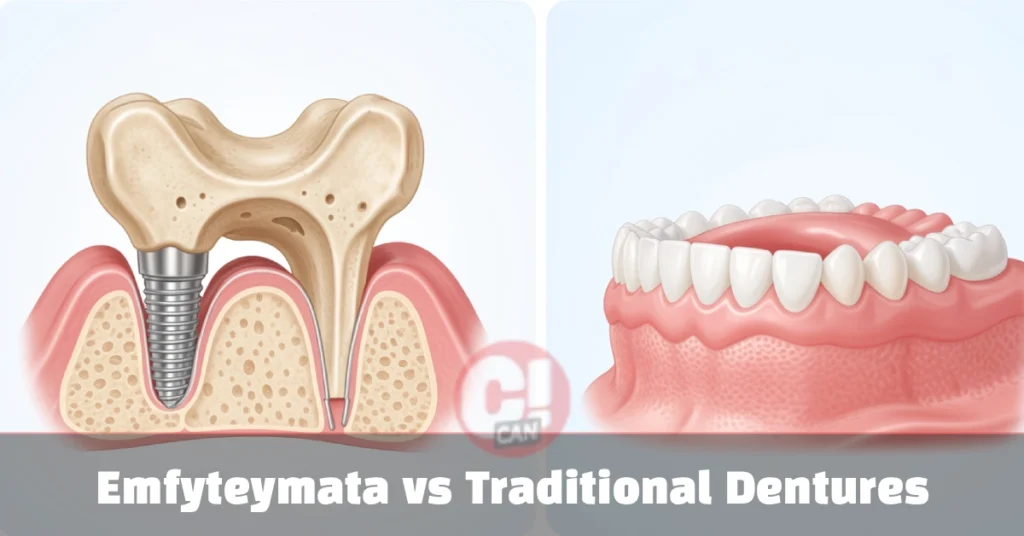
When comparing Emfyteymata vs Traditional Dentures, the core difference comes down to permanence and bone health. Emfyteymata (dental implants) are surgically placed titanium posts that fuse with the jawbone and function like natural teeth. Traditional dentures are removable prosthetics that rest on the gums. Implants offer better bone preservation, bite strength, and long-term durability. Dentures cost less upfront and require no surgery. The right choice depends on your health, budget, and long-term goals.
Roughly 26% of adults over 65 have lost most of their teeth — and for many of them, the choice between emfyteymata and traditional dentures is one of the most important health decisions they will make. Yet most people walk into that dental consultation with little idea what separates the two options beyond price.
This article breaks down exactly how each solution works, what living with them actually feels like, and which one makes sense depending on your situation. No jargon, no unnecessary upselling — just the information you need to make a clear-headed decision.
What Are Emfyteymata (Dental Implants)?
Emfyteymata are titanium or zirconia posts surgically placed into the jawbone. Once inserted, the bone gradually fuses around the post — a process called osseointegration — turning the implant into a stable artificial root. A custom crown, bridge, or full-arch prosthesis is then attached on top.
The result is a tooth replacement that behaves like a natural tooth. You brush it, chew with it, and largely forget it is there. Unlike removable solutions, emfyteymata do not shift during meals or speech, and they do not need to come out at night.
One detail competitors rarely explain clearly: emfyteymata also preserve the jawbone. When a tooth root is missing, the bone underneath slowly resorbs (shrinks) because it receives no stimulation. Implants replicate that stimulation, keeping the bone volume intact and preventing the “sunken face” appearance that long-term denture wearers sometimes develop.
Who qualifies? Most adults with good general health and adequate bone density are suitable. People with uncontrolled diabetes, heavy smoking habits, or significant bone loss may need preparatory treatment — such as a bone graft or sinus lift — before placement. A 3D cone beam CT scan at your consultation will show whether your jaw can support implants without additional work.
What Are Traditional Dentures?
Traditional dentures are removable prosthetics made from acrylic resin, sometimes reinforced with metal. They sit on top of the gums and rely on suction, the shape of your ridges, and sometimes dental adhesive for retention.
There are three main types. Full dentures replace an entire arch when all teeth are gone. Partial dentures clip onto remaining natural teeth to fill gaps. Immediate dentures are placed the same day as extractions, acting as a temporary solution while gum tissue heals and a permanent set is fabricated.
Modern dentures are far better than those from two decades ago. Materials are lighter, more lifelike, and better fitted. But the fundamental limitation remains: they sit on soft tissue, not bone, which means they can shift, generate sore spots, and gradually fit worse as the underlying jaw resorbs over time. Most patients need a reline (adjustment to the fit) every one to two years and a full replacement every five to eight years.
Head-to-Head: The Factors That Actually Matter
Here is where most comparisons fall short. Rather than listing pros and cons in isolation, it helps to see the two options side by side across the dimensions you will actually live with.
| Factor | Emfyteymata | Traditional Dentures |
|---|---|---|
| Feel and stability | Fixed; no movement | Removable; can shift |
| Bite strength | Near-natural | Roughly 20–25% of natural |
| Bone preservation | Yes | No — accelerates resorption |
| Upfront cost | Higher | Lower |
| Lifetime cost | Lower (longer lifespan) | Higher (replacements + relines) |
| Maintenance | Brush and floss normally | Remove nightly; soak and clean |
| Treatment timeline | 3–6 months total | 4–8 weeks |
| Surgery required | Yes | No |
| Lifespan | 15–25+ years with care | 5–8 years per set |
The cost comparison is worth reading twice. Dentures look more affordable at first glance, but factor in relines, repairs, adhesives, and the two or three replacement sets you will likely need over a decade, and the total cost difference narrows considerably.
The Middle Ground: Implant-Retained Dentures
Here is where many patients find the best balance — and it is a category competitors glossed over.
Implant-retained overdentures use two to four implants per arch to anchor a removable denture using magnetic or snap-on attachments. The denture still comes out for cleaning, but it locks into place during the day, eliminating most of the shifting and sore-spot problems of conventional dentures.
For patients who want significantly better stability than standard dentures but find the cost of a full fixed implant bridge out of reach, overdentures represent a practical middle path. They also require less bone than a full implant bridge, which matters if some resorption has already occurred.
Fixed full-arch solutions — commonly known as “All-on-4” or “All-on-6” — go one step further. Four to six implants support an entire arch of fixed teeth. Provisional teeth are often placed the same day as surgery. This is the closest you can get to a natural full set of teeth using implant technology.
How to Choose: A Practical Decision Framework
The right answer depends on your specific situation, but these four questions tend to cut through the noise:
1. What is your bone situation? If significant resorption has already happened, your dentist will need to assess whether grafting is needed. This adds time and cost to the implant path.
2. What is your health status? Certain conditions and medications affect healing and implant success. A thorough medical history review with your dental team is non-negotiable.
3. What is your timeline? If you need teeth quickly due to social or professional reasons, immediate dentures or an interim solution may bridge the gap while a longer implant treatment is completed.
4. What does “affordable” mean over ten years, not just today? Run the numbers with your dentist across both options, including expected maintenance. Many patients are surprised to find emfyteymata become cost-competitive when evaluated over a decade.
What Daily Life Actually Looks Like
With emphysema, your oral hygiene routine changes very little. You brush twice daily, floss with an interdental brush or water flosser around the implant, and attend regular checkups. Diet restrictions after the initial healing period are minimal.
With dentures, the routine requires more active management. You remove them nightly, brush them separately with a soft brush and non-abrasive cleaner, and soak them in a denture solution. Adhesive creams help with retention but add daily cost and an extra step. Certain foods — sticky sweets, very hard items, chewy bread — remain challenging regardless of how well the denture fits.
The Bottom Line on Emfyteymata vs Traditional Dentures
Both options can restore function and confidence. Emfyteymata deliver better long-term oral health outcomes, preserve bone, and feel closer to natural teeth — but they require surgery, a longer timeline, and higher upfront investment. Traditional dentures are faster, more accessible, and non-surgical, but they come with ongoing fit challenges and a real cost in jaw health over time.
If you are on the fence, ask your dentist about implant-retained overdentures. For many patients, that middle option delivers most of the stability of implants at a fraction of the full fixed-bridge cost. Whatever direction you choose, get a detailed cost comparison in writing — one that covers the full expected lifespan of each solution, not just the initial quote.