


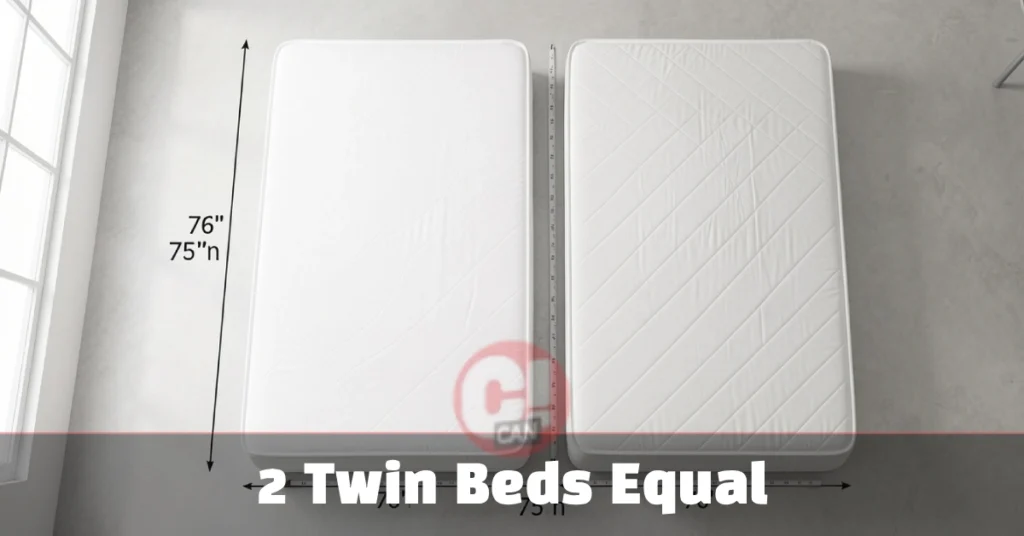
Two twin beds equal a combined width of 76 inches and a length of 75 inches — close to a king but 5 inches shorter. Two Twin XL beds equal a true king (76 x 80 inches), also called a split king. Two twins never make a queen; the width is wider, and the length is shorter than a standard queen mattress.
Most people assume combining two beds is straightforward. Push them together, done. But if you’ve ever bought king-size sheets for two twins and found them bunching up in weird places — or worse, your feet hanging off the edge — you already know the math isn’t that simple.
2 twin beds equal a sleeping surface that’s 76 inches wide and 75 inches long. That’s king-width, but five inches shorter than an actual king. Five inches may not sound like much until you’re 6 feet tall and sleeping stretched out. This guide breaks down every combination clearly — what you get, where it works, and what to watch out for before you buy frames, bedding, or accessories.
What Size Do 2 Twin Beds Equal Side by Side?
A standard twin mattress measures 38 inches wide and 75 inches long. Place two of them side by side, and you get a combined surface of 76 x 75 inches. The width matches a king perfectly. The length falls short by five inches.
Here’s the catch: a king mattress is 76 x 80 inches. So while the width lines up, you’re sleeping on a shorter surface. For shorter adults or occasional guest use, this rarely matters. For taller sleepers using this as their primary bed, that missing length shows up fast.
The combination works well in flexible spaces — guest rooms, short-term rentals, or rooms that need to switch between single and shared sleeping arrangements. But if you’re setting this up as a permanent bedroom solution, the length gap is worth thinking through before committing.
Do 2 Twin XL Beds Equal a King?
Yes — and this is where the math works out cleanly. A Twin XL mattress is 38 inches wide and 80 inches long. Two Twin XLs side by side produce a 76 x 80 inch surface, which is the exact size of a standard king. This setup is commonly called a split king.
The split king has become popular for one specific reason: each side is independent. Couples who disagree on mattress firmness — one wants plush, the other needs firm support for lower back issues — can each have exactly what they want without negotiating. Adjustable bed bases also pair well with this setup because each base operates separately.
But wait — there is one trade-off. A split king has a seam running down the middle. For solo sleepers or couples who tend to stay on their own side, it’s a non-issue. For people who move around a lot or want a completely unified surface, a one-piece king removes that center line entirely.
| Combination | Width x Length | Equals | Best Use |
|---|---|---|---|
| 2 Standard Twins | 76″ x 75″ | Almost King (shorter) | Guest rooms, flexible spaces |
| 2 Twin XL Beds | 76″ x 80″ | True King / Split King | Couples, adjustable bases |
| 1 Standard Twin | 38″ x 75″ | Twin | Kids, small rooms |
| 1 Twin XL | 38″ x 80″ | Twin XL | Taller adults, dorm rooms |
| 1 Queen | 60″ x 80″ | Queen | Couples wanting one surface |
Do 2 Twin Beds Make a Queen or a Full?
This question comes up constantly, and the answer is no for both.
A queen mattress is 60 x 80 inches. Two standard twins pushed together are 76 x 75 inches — wider than a queen and shorter at the same time. You won’t hit queen dimensions no matter how you arrange them.
A full mattress is 54 x 75 inches. Two twins at 76 inches wide are considerably wider than a full. So that combination doesn’t produce a full either.
2 twin beds equal neither a queen nor a full. They produce something that only aligns with a king in terms of width. If your target is a queen-size setup, the only real path is buying a queen mattress or using a split queen — a less common but available option made from two narrow mattresses sized to equal a queen when combined.
How to Make Two Twins Feel Like One Bed
The biggest practical complaint about pushing two twins together is the gap in the middle. If you’ve ever woken up with your hip sinking into the seam between two mattresses, you understand why this matters.
A mattress bridge or foam gap filler sits between the two mattresses and fills that center space. A shared king-size mattress topper laid across both mattresses then smooths everything out and creates a unified sleeping surface. These two products together solve most of the gap problem.
For frames, two separate twin frames will drift apart over time. Using a king-size bed frame that holds both mattresses in place, or using mattress connector straps, keeps everything from shifting during the night.
Sheets are their own challenge. Standard twin sheets won’t cover both mattresses. King-size fitted sheets work for the width, but if you’re using two standard twins (75 inches long), a regular king fitted sheet may be slightly long. Deep-pocket king fitted sheets handle the extra material better and stay in place more reliably. For two Twin XLs, king sheets fit correctly without any adjustment.
Who Should Actually Choose This Setup?
Not every bedroom calls for a split setup, but for the right situation, it makes more sense than buying a single large mattress.
Couples with different firmness preferences benefit most from two Twin XLs. One person can sleep on a medium-soft mattress while the other uses a firm one, with no compromise involved. This is especially practical when one partner has back pain, joint issues, or a specific sleep position requirement that a single mattress can’t address for both people.
Guest room setups and short-term rentals are another strong fit. Two separate twins give hosts the option to keep beds apart for friends or siblings, then push them together when a couple visits. It’s a space-use decision that pays off in flexibility rather than buying two separate beds and a third larger one.
Apartments and homes with narrow staircases also benefit. Moving a king mattress through a tight hallway or up a curved staircase is genuinely difficult. Carrying two twins through the same space is much more manageable. The setup ends up identical in terms of sleeping area, but the logistics of getting it there are far simpler.
Size Comparison: 2 Twin Beds Equal vs Other Common Mattresses
Understanding how two twins stack up against every standard size helps you make a final call with confidence.
| Mattress | Width | Length |
|---|---|---|
| Twin | 38″ | 75″ |
| Twin XL | 38″ | 80″ |
| Full | 54″ | 75″ |
| Queen | 60″ | 80″ |
| King | 76″ | 80″ |
| California King | 72″ | 84″ |
| 2 Standard Twins | 76″ | 75″ |
| 2 Twin XLs | 76″ | 80″ |
The California King is the only standard size that exceeds a king in length. If you’re tall and want both king-width and extra legroom, a Cal King is a better single-mattress choice. Two twins or two Twin XLs don’t reach that length.
Final Thoughts
The short version: 2 twin beds equal a surface that matches king width but comes up five inches short in length. Two Twin XLs close that gap and match a true king exactly. Neither combination produces a queen or full. And with the right frame, a foam gap filler, and king-size bedding, the setup can feel just as solid as a single large mattress.
The choice comes down to how you use the space and who’s sleeping in it. For permanent couple setups, two Twin XLs with an adjustable base is one of the most practical configurations available. For guest rooms or flexible spaces, two standard twins offer more versatility than a single large mattress ever could.
Measure your room, think about who the bed is for, and match the setup to the actual use — not just the dimensions on paper.
For More Visit this site: CanMagazine