


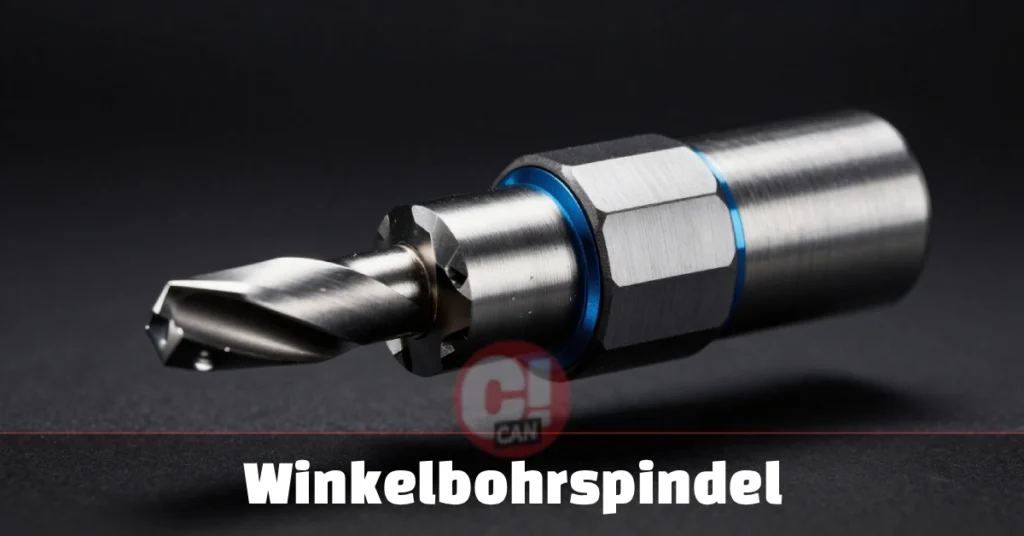
A Winkelbohrspindel (angle drilling spindle) is a specialized mechanical device that redirects rotational power from a motor to a tool at 90-degree or custom angles. It enables drilling, milling, and machining operations in tight spaces where direct access is impossible, eliminating the need to reposition workpieces during production.
What Is a Winkelbohrspindel and Why Does It Matters
You’re working on a complex aerospace component. The design demands drilling at specific angles, but your standard spindle won’t reach. This is where a Winkelbohrspindel steps in. Also known as an angle drilling spindle, it’s a German-engineered tool that transfers rotational motion at precise angles—typically 90 degrees, though adjustable versions exist. Rather than forcing you to reposition your workpiece, the spindle moves the cutting tool to the exact angle needed.
The term itself reveals its purpose: “Winkel” means angle in German, and “Bohrspindel” means drilling spindle. In industries handling intricate designs, this distinction matters tremendously. Aerospace manufacturers, automotive suppliers, and metal fabricators rely on this equipment because it solves a fundamental production challenge: accessing difficult-to-reach areas while maintaining accuracy. Without it, you’d need multiple machine setups or creative workarounds—both costly and time-consuming.
How a Winkelbohrspindel Actually Works
Inside a Winkelbohrspindel sits precision engineering built around power transfer. The spindle receives rotational energy from your CNC machine’s main spindle through an input shaft. Here’s where the innovation happens: internal bevel or hypoid gears redirect that spinning motion at your desired angle. Think of it like a mechanical translator—converting straight-line rotation into angled motion without losing power or accuracy.
Quality bearings support these gears, keeping vibration to a minimum while distributing load evenly. The housing protects everything while maintaining alignment critical for precision. This design keeps torque consistent throughout the operation. Unlike flexible shafts—which lack rigidity—or basic angle drills, a Winkelbohrspindel maintains the same cutting performance whether you’re drilling your first hole or your thousandth.
Modern versions integrate seamlessly with CNC systems. Your machining program tells the spindle exactly where to position the tool. No manual adjustments. No guesswork. Just repeatable accuracy on every part.
Types of Winkelbohrspindels and When to Use Each
Not all angle spindles are created equal. Understanding the types helps you pick the right tool for your job.
Fixed-angle models lock in at 90 degrees. These units deliver maximum precision and rigidity because the angle never changes. If your production run involves parts requiring only 90-degree drilling, this is your best choice. They’re durable, affordable, and built for high-volume production where consistency beats flexibility.
Adjustable-angle spindles let you set different angles as needed—50 degrees for one operation, 120 degrees for another. This flexibility suits prototyping, custom manufacturing, or jobs with varied requirements. The trade-off: slightly less rigidity than fixed models, though quality-adjustable units maintain excellent accuracy.
High-speed variants are engineered for rapid production. They spin faster, letting you drill and mill quicker without sacrificing surface finish. Automotive manufacturers love these for high-volume engine component machining.
Heavy-duty versions prioritize torque over speed. If you’re drilling through tough materials like stainless steel or composites, these deliver the cutting force needed. They’re built for demanding, continuous operation.
Real-World Applications Across Industries
Aerospace manufacturing depends on Winkelbohrspindels. Turbine blades, landing gear, and fuselage components require holes at specific angles to strict tolerances. A misaligned hole fails inspection. A reposition adds hours to production. The spindle eliminates both problems.
Automotive suppliers use them for engine blocks, transmission housings, and suspension components. Imagine drilling an oil passage into an engine block—wrong angle and the entire part scrapes. Angle spindles make it routine. For those exploring related topics, precision machining has transformed modern manufacturing through similar innovations.
Metal fabrication shops handle brackets, fixtures, and structural parts where angled cuts define fit and function. A furniture maker might use a Winkelbohrspindel for dowel holes in cabinet joinery; a structural steel fabricator uses it for connection plates.
Woodworking and plastics benefit from the precision, too. Chair frames, custom enclosures, and prototype components all benefit from angled drilling without repositioning.
The common thread: these industries can’t afford setup mistakes. Winkelbohrspindels eliminate them.
The Advantages That Matter in Production
The biggest win is the elimination of multiple setups. Repositioning a workpiece takes time. It introduces alignment errors. It slows your cycle time. A Winkelbohrspindel handles the angle without moving the part. Your production schedule tightens immediately.
Accuracy compounds over time. Precision gearing means every hole, every cut maintains the same relationship to your reference surfaces. On parts requiring 50+ holes at different angles, this consistency drives quality. No rework. No scrap.
Machine versatility increases. One CNC machine now handles operations that previously required two. Your capital equipment works harder, justifying its investment faster.
Space efficiency matters in tight shops. The spindle’s compact design fits into confined areas where bulky angle-drilling attachments won’t. You’re not redesigning your machine layout to accommodate new equipment.
Maintenance Keeps It Running Reliably
A Winkelbohrspindel needs basic care to avoid expensive failures. Lubrication is critical—the gearing system demands proper oil levels and cleanliness. Contamination accelerates wear. Many facilities establish monthly lubrication schedules.
Inspect alignment quarterly. Even small deviations accumulate into measurable errors over hundreds of parts. A quick dial indicator check catches problems early.
Check bearings for noise or vibration changes. These are early warnings of wear. Worn bearings increase runout, degrading surface finish. Caught early, replacing bearings costs far less than replacing a whole spindle.
Tool holder cleanliness matters too. Chips and coolant buildup reduce holding force. A 30-second cleaning between tool changes prevents slippage.
Selecting the Right Spindle for Your Needs
Start with your production reality. Are you making identical parts (fixed angle best) or varied geometries (adjustable angle better)? How fast do you need cycle times—does high-speed matter? What materials dominate—aluminum (fine precision), steel (torque-demanding), or tough composites (serious power needed)?
Check compatibility with your CNC machine. Not all spindles mount identically. Your machine integrator or the spindle manufacturer verifies fit before purchase.
Consider the availability of spare parts and service support. The cheapest spindle becomes expensive if replacement bearings require a 12-week lead time.
Investment That Pays Back Quickly
A Winkelbohrspindel costs more than basic accessories—typically $2,000 to $8,000 depending on type and features. But calculate your return: eliminating one repositioning step saves 2-5 minutes per part. On a 100-piece run, that’s 200-500 minutes of machine time recovered. Multiplied across annual production, the spindle pays itself in months.
Quality parts command premium pricing. Spindles improve your ability to hit tight tolerances, opening doors to contracts you currently can’t pursue. That new business often exceeds the equipment’s direct cost savings.
Conclusion
A Winkelbohrspindel solves a production problem that standard equipment can’t address. By enabling angled machining without repositioning workpieces, it improves speed, accuracy, and versatility simultaneously. Whether you run aerospace tooling or custom metalwork, understanding how these spindles function, which type fits your operation, and how to maintain them helps you compete in precision manufacturing. The investment is real, but the return—in saved time, improved quality, and expanded capacity—makes it one of the smartest additions to any serious machining operation.
Frequently Asked Questions
Can I install a Winkelbohrspindel on my existing CNC machine?
Most modern CNC machines support angle spindles if they use standard interfaces. Verify mounting compatibility with your equipment before purchasing.
Do I need an adjustable or a fixed-angle?
Fixed-angle (90 degrees) suits high-volume, single-design work. Adjustable models work better for varied part geometries or prototyping.
How often does maintenance occur?
Monthly lubrication checks and quarterly alignment inspections keep most spindles running reliably for years.
What’s the typical lifespan?
With proper maintenance, quality Winkelbohrspindels operate 5-10+ years before a major overhaul.
Are high-speed versions worth the premium?
Yes, if your production volume justifies the faster cycle times. The payback period shortens significantly on high-volume runs.