


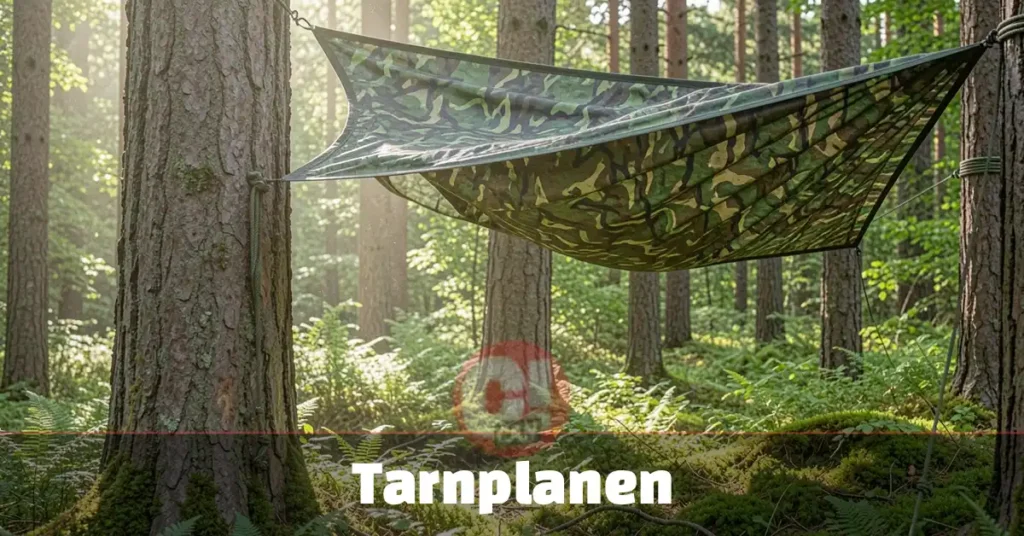
A tarnplanen is a camouflage-patterned, weather-resistant tarpaulin originally developed for military concealment. The word comes from German — “Tarn” means camouflage, “Planen” means tarp or cover. Modern versions are used in camping, hunting, disaster preparedness, and tactical training. They come in multiple materials, sizes, and terrain-specific camo patterns.
Most people know what a tarp is. But a tarnplanen? That’s a different level entirely. Militaries across Europe — particularly German armed forces — have been using camouflage tarpaulins for over a century to hide soldiers, vehicles, and equipment from enemy eyes. Today, that same technology is a standard kit for hunters, survivalists, wildlife photographers, and serious campers worldwide.
So if you’re trying to figure out what a tarnplanen actually is, whether it’s worth buying, and which type suits your needs, this guide covers it straight.
What is a Tarnplanen?
Tarnplanen is a German word combining “Tarn” (camouflage) and “Planen” (tarps). It refers to waterproof, camouflage-patterned tarpaulins used in military operations, camping, hunting, and wildlife photography. Built from polyester, nylon, or canvas, tarnplanen provide concealment and weather protection in one portable, lightweight sheet.
What Exactly Is a Tarnplanen?
A tarnplanen is not just a tarp with a camo print slapped on it. The design is deliberate. The patterning is meant to break up the outline of whatever sits beneath it — whether that’s a military vehicle, a deer blind, a tent, or a pile of gear. The material is typically waterproofed and UV-treated, and the edges are reinforced with metal grommets so you can anchor it down in wind or rain without the fabric tearing.
The German Bundeswehr (federal armed forces) helped popularize the modern version. Their Flecktarn-patterned shelter quarter — the Zeltbahn — became one of the most copied designs in outdoor gear history. Today, brands like Mil-Tec, Pentagon Tactical, and 5.11 Tactical produce civilian-grade versions built to similar standards. What separates a quality tarnplanen from a cheap knockoff is the denier count of the fabric, the coating type, and how the grommets are attached. A 210D polyester tarp with PU coating and welded grommets will outlast a 70D version with stitched rings by years.
Who Actually Uses Tarnplanen — and Why
Here’s the catch: tarnplanen are not just for soldiers or hardcore survivalists. The use cases are broader than most people realize.
Hunters rely on them to build quick hides and break up their visual silhouette in the field. A hunter sitting in woodland camo against a solid brown tree trunk is far easier to spot than one draped under a Flecktarn or MultiCam tarpaulin that fragments their outline against the background.
Wildlife photographers use them similarly — particularly bird and large mammal photographers who need to stay hidden for hours. A tarp draped over a frame or tied between trees creates a low-profile blind that doesn’t cost a fraction of a commercial photography hide.
Campers and backpackers find them useful as emergency rain tarps, groundsheets, and camp shelters. Unlike a standard blue poly tarp, a camo version doesn’t stand out like a signal flare in the wilderness. This matters in national parks and areas where low-impact camping is encouraged.
Disaster preparedness and bushcraft communities use tarnplanen because they are durable, multi-purpose, and compact. A single well-made tarp can serve as a rain catch, an emergency stretcher, a wind barrier, or a debris shelter, depending on the situation.
Camouflage Patterns: Choosing by Terrain
Not all camo patterns work in all environments. Choosing the wrong one actually makes you more visible, not less — because a pattern that clashes with its surroundings creates contrast rather than eliminating it.
| Pattern | Best Environment | Key Colors |
|---|---|---|
| Woodland / BDU | Temperate forests | Green, brown, black |
| Flecktarn | Mixed European terrain | Olive, brown, spots |
| Desert / AOR1 | Dry, open terrain | Tan, beige, sand |
| MultiCam | Multi-terrain | Earth tones, varied |
| Digital / ACU | Urban or grey terrain | Grey, urban tones |
| Shadow / 3D Leaf | Dense jungle/bush | Deep greens, black |
The rule of thumb: match the dominant color of your environment first, then worry about pattern. A solid olive tarnplanen in a dense green forest will outperform a desert camo one every time.
Material Matters: What to Look For Before You Buy
The fabric a tarnplanen is made from determines its weight, packability, weather resistance, and lifespan. Three main material types cover most of the market.
Polyester with PU or silicone coating is the most common. It’s lightweight, fast-drying, and hydrophobic. Silicone-coated versions (silnylon or silpoly) are lighter still and compress smaller, which makes them popular with ultralight backpackers. The trade-off is less abrasion resistance compared to thicker fabrics.
Ripstop nylon adds a cross-hatch reinforcement thread woven into the fabric. It won’t prevent punctures, but it stops small tears from spreading — useful when you’re anchoring in rocky terrain or through dense brush.
Canvas and canvas-blend tarps are heavier but more breathable and naturally quieter in the wind. Military surplus versions often use canvas because it handles rough use and doesn’t crinkle or rustle the way synthetic fabrics do. The downside is weight and the need for waterproofing treatment to stay effective in heavy rain.
One feature many buyers overlook: grommet spacing. Grommets placed every 30–45 cm around the perimeter give you far more anchoring options than corner-only setups. In unpredictable weather, that flexibility makes a real difference.
How to Set Up a Tarnplanen Correctly
Setup depends on what you’re using it for, but a few principles apply across the board. First, keep it taut. A loose tarnplanen pools water, catches wind, and collapses under light snowfall. Ridgeline setups — where you run a rope between two anchor points and drape the tarp over it at an angle — shed rain efficiently and stay stable in wind.
Second, break up straight lines. The edges of a flat tarp create geometric shadows that stand out in natural environments. Folding corners, attaching natural debris like branches or leaves to the edges, and avoiding perfect horizontal setups all reduce your visual signature significantly.
Third, always stake into the ground when conditions allow. Rocks and bungees work in a pinch, but stakes through reinforced grommets are the most stable option in wind.
Tarnplanen vs. Standard Tarps: Is the Upgrade Worth It?
A basic blue polyethylene tarp costs a few dollars and does the job in a backyard. So why spend more on a tarnplanen? The answer depends on what you’re doing.
If concealment matters — hunting, photography, tactical training, or low-impact wilderness camping — a tarnplanen earns its price difference. The camo patterning reduces visual detection, the materials are generally more durable, and the reinforcement is built for harder use. If you’re just covering firewood or protecting gear in a vehicle, a standard tarp is fine.
For anyone spending serious time outdoors, a quality tarnplanen from a reputable brand sits in a different category than a generic tarp. It’s a piece of gear you buy once and use for a decade.
Final Word on Tarnplanen
The tarnplanen started as military kit and earned its place in civilian outdoor gear on merit. It’s durable, multi-purpose, and purpose-built for environments where visibility control matters. Whether you’re a hunter, a photographer, a backcountry camper, or someone building out a go-bag — knowing what to look for in a tarnplanen means you buy the right one the first time.