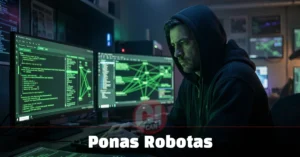

Ponas Robotas is the Lithuanian translation of “Mr. Robot,” the acclaimed USA Network series that follows Elliot Alderson, a cybersecurity engineer who moonlights as a vigilante hacker. Beyond the TV show, the term has become a reference point for real conversations about AI ethics, data privacy, corporate surveillance, and the growing role of autonomous systems in everyday life.
Most people stumble across the term “Ponas Robotas” without context. It sounds technical, maybe Eastern European, possibly a product name. Here’s what it actually is: the Lithuanian phrase for “Mr. Robot,” the TV series that ran from 2015 to 2019 and is still considered one of the most technically accurate portrayals of hacking ever made. But the reason people keep searching for it goes well beyond subtitles. The ideas buried inside this show — about AI, surveillance, corporate power, and human identity — have only grown more relevant since the finale aired.
This article breaks down what Ponas Robotas is, what the show actually got right about technology, and why its themes matter in a world where AI is no longer fictional.
What “Ponas Robotas” Actually Refers To
The phrase comes from Lithuanian, where “ponas” means “mister” or “sir,” and “robotas” is a direct borrowing of the word “robot.” Together, they translate cleanly to “Mr. Robot” — the title character and central force of the American psychological thriller created by Sam Esmail.
The show follows Elliot Alderson, a socially withdrawn cybersecurity engineer who works for a firm called Allsafe by day and hacks systems as a vigilante by night. His world shifts when a mysterious anarchist known only as Mr. Robot recruits him into a group called fsociety. Their target is E Corp, a fictional conglomerate that holds nearly all consumer debt in the United States. The plan: delete that debt entirely by wiping E Corp’s financial records.
What made the series stand out was not just its plot. It was the accuracy. Security researchers publicly praised the show for depicting real hacking tools — Kali Linux, social engineering, Rubber Ducky USB attacks — without sanitizing them into Hollywood nonsense. That authenticity gave Ponas Robotas a reputation that outlasted its run.
The Technology the Show Predicted Correctly
Here’s what competitors mostly miss: Ponas Robotas was not just a drama about a disturbed hacker. It was a fairly precise map of threats that became headline news within years of each episode airing.
The 2015 hack arc mirrored real events. The show depicted a devastating breach of a financial institution using methods remarkably similar to the actual Bangladesh Bank cyber heist of 2016, where attackers used SWIFT network vulnerabilities to attempt a $951 million theft. The writers did not predict the future — they understood the present well enough that reality caught up.
Dark Army’s structure resembles state-sponsored hacking groups. In the show, the Dark Army is a Chinese hacking collective working with unclear government ties. This mirrors documented groups like APT41, which the U.S. Department of Justice indicted in 2020 for attacks spanning healthcare, telecom, and gaming industries across multiple countries.
The ransomware subplot was ahead of its time. Season 2 of the show explored the aftermath of a massive encryption-based financial attack. WannaCry and NotPetya — two of the most destructive ransomware campaigns in history — hit the real world in 2017, roughly a year later.
The show did not have a crystal ball. It had writers who consulted actual security professionals and paid close attention to where digital infrastructure was already fragile.
What Ponas Robotas Says About AI and Automation Today
The show’s deeper concern was never really about hacking tools. It was about who controls systems, and what happens when those systems control people.
That question sits at the center of the current AI conversation. Machine learning models are now making decisions about loan approvals, medical diagnoses, content recommendations, and even parole hearings. In each case, the logic behind the decision is often opaque — not because the engineers are hiding it, but because the models themselves are difficult to interpret. This is what researchers call the “black box” problem, and it is one of the most discussed challenges in AI governance right now.
Elliot’s anxiety about data — who has it, what they do with it, how it shapes behavior — reflects a concern that has moved from paranoia to policy. The EU’s AI Act, passed in 2024, directly addresses high-risk AI systems with mandatory transparency and human oversight requirements. The United States has introduced its own executive orders and NIST frameworks targeting similar gaps. Ponas Robotas, whether intentionally or not, helped a generation of viewers understand why these rules needed to exist.
The Human Element That AI Still Cannot Replace
One of the show’s most underappreciated threads is Elliot’s mental health. He experiences dissociative identity disorder, lives with depression, and struggles to form genuine human connections. The series frames this not as a weakness but as the exact thing that makes him dangerous and, eventually, capable of empathy.
This matters in the context of AI because it points to what automated systems consistently fail to handle: nuance, context, and moral weight. A robot can sort packages. It can flag fraudulent transactions. It can recommend a playlist. What it cannot do is understand why a patient is refusing treatment, or recognize that a distressed caller needs silence more than information.
Human oversight is not just an ethical checkbox — it is a functional requirement in any system where decisions carry consequences. The International Federation of Robotics reported in 2024 that collaborative robots (cobots), designed to work alongside humans rather than replace them, now represent the fastest-growing segment of industrial automation. The industry itself is moving toward human-machine partnership, not replacement.
Why Ponas Robotas Still Gets Searched in 2026
The show ended. The cultural moment passed. So why does the term keep circulating?
Part of the answer is that people are still discovering it. Streaming has given shows a long tail that broadcast television never had. But the bigger reason is that the questions the show raised have not been answered. Who owns your data? What happens when a corporation knows more about you than your family does? Can a person be radicalized by an algorithm and still be held responsible for their actions?
These are not rhetorical questions anymore. They are active legal and regulatory debates happening in courtrooms, legislatures, and ethics committees around the world.
Ponas Robotas gave those debates a narrative shape — a face, a story, a consequence. That is why a Lithuanian phrase for a cancelled TV show keeps showing up in search results. The show asked the right questions before most people knew there were questions to ask.
The Bottom Line
Ponas Robotas is both a cultural artifact and a lens. If you have not watched the series, it holds up. If you have, revisiting it now — with everything that has happened in AI, surveillance, and cybersecurity since 2019 — is a different experience entirely. The fiction aged well because the reality it pointed toward kept arriving, one breach at a time.