


The average UK household wastes roughly £150 per year on standby power alone. That single figure points to a much larger problem: most homes were not designed with modern life in mind. They were built for a different era — one with different expectations around energy, comfort, and connectivity.
That is where Genhouse comes in. It describes a new generation of residential design, built around smart systems, sustainable materials, and layouts that work with how people actually live. If you are planning to build, renovate, or simply want to understand where housing is heading in 2026, this guide covers everything you need to know.
What Genhouse Actually Means
The term breaks down simply. “Gen” points to generation or creation — new thinking, new approaches. “House” is the physical space where that thinking takes form. Together, the concept describes a home purpose-built for modern life, not one retrofitted with technology as an afterthought.
What separates a genhouse from a standard smart home is the depth of integration. A smart home might have a voice assistant and connected lights. A genhouse treats energy management, air quality, security, heating, and even structural materials as one connected system. Every element is chosen to work together. Nothing is added for novelty.
Here is the key point: Genhouse is not a brand or a certification. It is a design philosophy. That means you can apply its principles whether you are building a new property from scratch or undertaking a significant renovation on an existing one.
The Core Features That Define a Genhouse
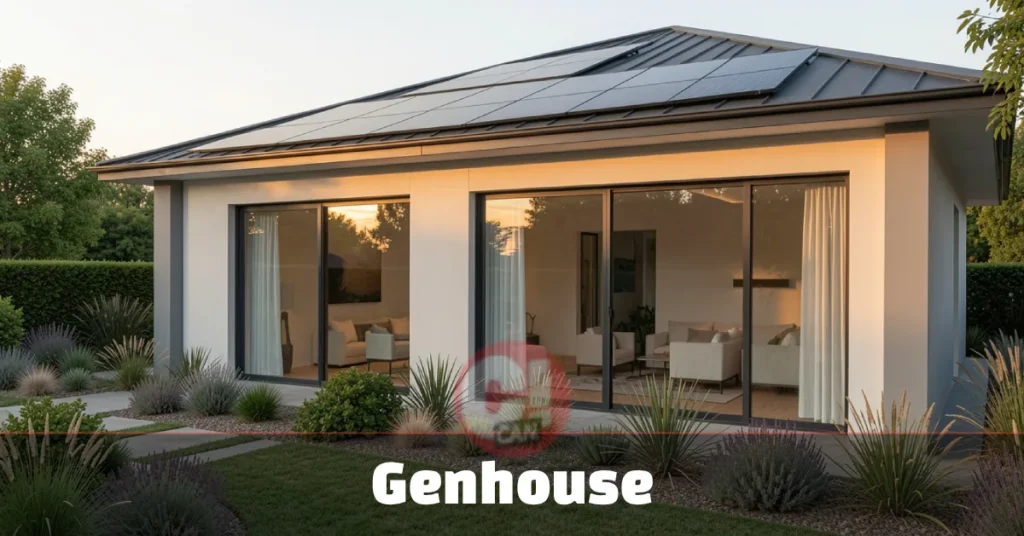
Smart energy management is the most measurable feature. Genhouse designs typically include solar PV panels paired with home battery storage — products like the Tesla Powerwall or GivEnergy systems are common examples in the UK market. A smart energy monitor then tracks consumption in real time, alerting you when usage spikes and automatically adjusting connected devices to reduce waste during peak hours.
Thermal performance is equally important. Genhouse builds prioritise high-grade wall insulation, triple-glazed windows, and airtight construction that meets or exceeds Passivhaus standards. The practical result is a home that holds heat in winter and stays cooler in summer without relying heavily on mechanical heating or cooling. In 2026, the UK’s Future Homes Standard, now in full effect, essentially mandates this level of performance for all new residential builds.
Home automation ties the systems together. Platforms like Google Home, Apple HomeKit, or KNX — popular in European builds — allow a single interface to manage lighting, security cameras, door locks, and HVAC. The distinction from a basic setup is that in a genhouse, these systems share data. A motion sensor near the front door can trigger the heating to adjust when it detects you returning home. Window sensors inform the HVAC when natural ventilation is sufficient. Everything works in coordination.
Sustainable Materials: The Detail Most Guides Skip
Most articles covering this topic mention eco-friendly materials in one sentence and move on. But the materials question is one of the most consequential decisions in any modern build, and it deserves considerably more attention.
Structural Insulated Panels, known as SIPs, are gaining ground as a genuine alternative to traditional brick or masonry construction. They reduce build time, improve airtightness, and carry a lower embodied carbon footprint than poured concrete. Cross-Laminated Timber, or CLT, is another option — widely used in Scandinavia and increasingly adopted in UK residential projects for both speed and sustainability credentials.
For interior finishes, low-VOC paints and adhesives matter more than most homeowners realise. Standard paints off-gas volatile organic compounds into the indoor air for months after application. In a well-sealed greenhouse where ventilation is mechanically controlled, indoor air quality is a design priority — not an afterthought. Choosing low-VOC products is a small step that creates a measurable difference in liveability.
Rainwater harvesting and greywater recycling round out the genhouse approach to resource efficiency. A basic rainwater collection system can reduce outdoor water use by up to 50 per cent. More advanced setups route greywater from showers back into toilet cisterns, cutting utility bills consistently year after year.
Traditional Home vs Genhouse: A Direct Comparison
| Feature | Traditional Home | Genhouse (2026) |
| Energy Source | Grid-dependent | Solar + battery storage |
| Insulation Standard | Building Regs minimum | Passivhaus level or above |
| Heating Control | Manual thermostat | AI-adjusted smart HVAC |
| Construction Material | Brick/concrete | SIPs, CLT, recycled materials |
| Water Management | Standard mains supply | Rainwater + greywater recycling |
| Security | Basic alarm system | Smart locks, cameras, biometrics |
| EPC Rating | C or D typically | A — standard by design |
The EPC rating column is particularly relevant in 2026. Properties with an A or B Energy Performance Certificate now sell faster and command a price premium in the UK market. A genhouse, by design, achieves top-tier ratings — which directly protects the long-term value of your investment.
Is the Upfront Cost Worth It?
This is the question most people actually want answered. The short version: yes, but the payback period depends on how much of the genhouse concept you implement.
A full build — solar panels, battery storage, SIP structure, and full automation — will typically cost 10 to 20 per cent more than a standard new build. But running costs tell a different story. A well-executed greenhouse can reduce energy bills by 60 to 80 per cent compared to a standard property of the same size. Over ten years, those savings generally cover the additional build cost entirely.
UK government schemes provide additional support. The Great British Insulation Scheme and the Boiler Upgrade Scheme both offer partial funding for energy efficiency upgrades — useful for anyone retrofitting an existing property toward GenHouse standards. It is worth checking the current eligibility criteria, as the schemes have been updated for 2026.
How to Apply Genhouse Principles to Your Current Home
You do not need to build from scratch to benefit from this approach. These upgrades move any existing property incrementally in the right direction:
- Install a smart thermostat — Hive, Tado, and Nest are widely available and straightforward to set up in most UK homes
- Add solar panels and explore battery storage through the Energy Saving Trust grant finder
- Upgrade to triple glazing, starting with north-facing walls where heat loss is greatest
- Switch to low-VOC paints on your next interior repaint, especially in bedrooms and living areas
- Fit a smart energy monitor, such as Hildebrand Glow or Emporia Vue, to identify where your electricity actually goes
- Consider a Mechanical Ventilation with Heat Recovery unit if you are undertaking a larger renovation — it maintains fresh air without losing heat
Each step moves your home closer to genhouse principles without requiring a dramatic overhaul. The gains are cumulative — and each improvement also adds to your EPC rating.
Where Genhouse Is Heading in 2026 and Beyond
The direction of travel is clear. The UK’s Future Homes Standard, fully implemented in 2026, requires all new homes to produce 75 to 80 per cent lower carbon emissions than those built under previous regulations. That standard effectively mandates genhouse-level performance for any new residential construction — making this less of a niche choice and more of an inevitable baseline.
The Matter standard is also now mainstream — backed by Apple, Google, Amazon, and Samsung, this universal smart home protocol allows devices from different manufacturers to communicate reliably. That removes the biggest compatibility barrier that previously made full home automation frustrating and expensive for most homeowners.
Genhouse is not a trend that will peak and fade. It is the direction residential construction is moving, shaped by regulation, rising energy costs, and buyers who want more from a property than four walls and a roof. The standards are rising. The question is whether your home is rising with them.
Final Thoughts
The genhouse concept gives a name to something already happening across the housing market: a fundamental rethink of what a home should do. Energy performance, automation, and material quality are no longer premium extras. They are fast becoming the expected standard — and in many cases, the regulatory requirement.
Whether you are building new, renovating, or simply planning, understanding genhouse principles puts you in a stronger position as a homeowner, a builder, or an investor. The gap between homes that meet modern standards and those that do not is widening every year. Starting now — even with small steps — keeps you well ahead of it.