

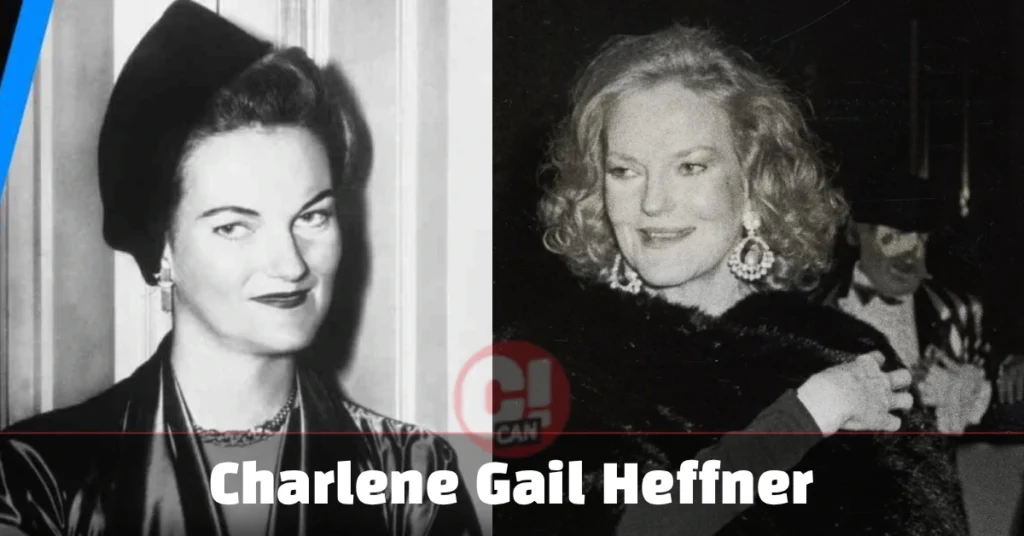
Charlene Gail Heffner, also known as Chandi Heffner, is an American private figure born in the early 1950s. She is best known as the legally adopted adult daughter of billionaire heiress Doris Duke. In 1988, Duke adopted her, and after Duke died in 1993, Heffner received an estimated $65 million settlement from the estate following a high-profile legal dispute.
In 1988, one of the wealthiest women in American history made a decision that shocked her legal team, her inner circle, and the general public: she legally adopted a woman in her mid-30s. That woman was Charlene Gail Heffner. The story that followed — spiritual connections, a billion-dollar estate, a bitter legal battle, and a $65 million settlement — remains one of the most discussed inheritance cases in U.S. history.
You might know her as Chandi Heffner. You might have come across her name while reading about Doris Duke or American tobacco money. Either way, the full picture is more detailed than most brief profiles let on. This article covers her background, her relationship with Doris Duke, the legal aftermath, her net worth as of 2026, and what her life looks like today.
Who Is Charlene Gail Heffner?
Charlene Gail Heffner was born in the United States in the early 1950s, making her in her early 70s as of 2026. Her biological family background has never been confirmed publicly. She did not come from wealth, prominence, or any public-facing world. Details about her childhood, education, and early adult years remain largely unverified.
What is documented is her adult identity. She became associated with the Hare Krishna movement and broader Eastern spiritual traditions — meditation, philosophy, and devotional practice. She was also known for belly dancing, which placed her within creative and alternative lifestyle circles rather than mainstream American society.
Her spiritual name, Chandi, comes from this period. It references a form of the Hindu goddess Durga. She used this name — and various combinations of it — throughout her public profile, which is why you’ll see “Chandi Heffner,” “Chandi Duke Heffner,” and “Charlene Gail Heffner” used interchangeably across records and media reports.
| Key Detail | Information |
|---|---|
| Full Name | Charlene Gail Heffner |
| Also Known As | Chandi Heffner, Chandi Duke Heffner |
| Date of Birth | Early 1950s (exact date not disclosed) |
| Age (2026) | Early 70s |
| Nationality | American |
| Known For | Adopted daughter of Doris Duke |
| Settlement Amount | Approx. $65 million (1995) |
| Current Status | Private individual |
How She Met Doris Duke
Charlene Gail Heffner crossed paths with Doris Duke sometime in the 1980s, reportedly during one of Duke’s extended stays in Hawaii. The timing matters. By then, Doris Duke was in her 70s, one of the wealthiest women alive, and going through a phase of deep personal and spiritual exploration.
Duke had suffered a personal tragedy decades earlier — her only biological child died shortly after birth in 1940. That loss stayed with her. In her later years, Duke reportedly explored beliefs around reincarnation, and according to some accounts, she believed Heffner shared a spiritual connection with her. Whether that belief was genuine or encouraged is something that legal proceedings later scrutinised heavily.
The two women formed a close bond. Heffner became part of Duke’s personal circle, travelling with her and spending time at properties across Hawaii and the mainland U.S. Their relationship was emotional and social, not professional or financial in any formal sense — at least not at first.
The Adult Adoption of 1988
Here’s the part that most people find genuinely surprising. In 1988, Doris Duke legally adopted Charlene Gail Heffner as her adult daughter. Heffner was in her mid-30s at the time. Duke was 75.
Adult adoption is legal in several U.S. states. It creates the same legal parent-child relationship as any other adoption, with inheritance rights attached. But it is uncommon at this wealth level, and Duke’s advisors, trustees, and social associates were immediately concerned.
The adoption raised questions that were hard to ignore. Was Duke making this decision freely? Was Heffner positioned to benefit from an estate worth hundreds of millions of dollars? Critics pointed to the asymmetry: an elderly, emotional woman adopting a younger adult with no prior family connection during a spiritually vulnerable phase of her life.
Following the adoption, Heffner gained the position of Duke’s daughter in the legal sense. But she did not gain control over Duke’s finances, the Doris Duke Charitable Foundation, or any formal authority over her properties and assets.
The Falling Out and Legal Battle
The relationship did not hold. Within a few years of the adoption, Doris Duke distanced herself from Charlene Gail Heffner. Duke’s advisors intervened, raising concerns about Heffner’s influence over an aging and increasingly vulnerable woman. Eventually, Duke revised her estate plans and removed Heffner as a primary beneficiary.
Duke died in October 1993 at her estate in Beverly Hills. Her estate was valued at over $1 billion. The majority was directed toward charitable foundations — most significantly the Doris Duke Charitable Foundation, which continues to fund arts, environment, child welfare, and Islamic art programs to this day.
Charlene Gail Heffner contested the estate. Her legal position centred on promises Duke had allegedly made — financial security, long-term support, and recognition as a true daughter and heir. The dispute drew national media attention. It was covered as both a human interest story and a serious legal case involving questions of elder influence, estate planning, and adult adoption law.
After extended proceedings, the case settled in late 1995. Heffner received an estimated $65 million in exchange for dropping all claims against the Duke estate. The settlement did not involve a public trial verdict, meaning no court formally ruled on the legitimacy of her claims.
Charlene Gail Heffner’s Net Worth in 2026
The $65 million settlement from 1995 is the one confirmed financial anchor in Charlene Gail Heffner’s story. Everything beyond that is inference based on her lifestyle and the absence of public financial activity.
She has not launched companies, appeared as an investor, or participated in any publicly documented business ventures. There are no SEC filings, charitable foundation records, or business registration documents tied to her name in accessible public databases.
She is believed to have retained a property in Hawaii connected to her years with Doris Duke. Assuming she managed her settlement conservatively — accounting for three decades of asset growth alongside living expenses and possible property-related costs — her net worth in 2026 is broadly estimated in the range of $40 to $70 million. That range reflects realistic scenarios: neither aggressive investment growth nor significant wealth erosion.
Here’s the catch: no public figure has verified this number. Any figure you see quoted online (including $65 million as a net worth) conflates the settlement payment with current wealth, which is not accurate. The settlement was received in 1995 — that money has had 30 years to grow, be spent, or change in value.
Where Is Charlene Gail Heffner Today?
Following the settlement, Charlene Gail Heffner stepped almost entirely out of the public eye. She has not given interviews. She has not written a memoir. She has not used social media to document her life or engage with the ongoing interest in her story.
Reports and sources from over the years suggest she lives on a property in Hawaii, likely the same region where she first connected with Doris Duke. She is described as living quietly — caring for animals, maintaining a connection to nature, and keeping her personal life entirely private.
There are no credible reports of marriage or children. Her withdrawal from public life has been consistent and deliberate. This is not someone who flirted with privacy and then returned to cameras. By all available evidence, Charlene Gail Heffner made a clean break from public attention after 1995 and has maintained it for over three decades.
Why Her Story Still Matters in 2026
Charlene Gail Heffner’s case is not just a celebrity gossip footnote. It sits at the intersection of several serious legal and social questions that remain relevant today.
Adult adoption and inheritance rights are still misunderstood by the general public. Many people assume adoption only applies to minors. Her case brought adult adoption into public discourse and prompted estate lawyers to address it more carefully in their planning conversations.
Elder financial exploitation is an area of growing legal concern. Whether or not Heffner’s relationship with Duke crossed that line was never formally adjudicated. But the case became a reference point in discussions about how older, wealthy individuals can be vulnerable to influence — even from people they genuinely love or trust.
Estate planning at extreme wealth levels has become more rigorous, partly because of cases like this. The Doris Duke estate and its legal battles pushed foundations and attorneys to think more carefully about how personal relationships interact with charitable intent and formal estate documents.
Her story is cited in law school case discussions, elder law seminars, and inheritance planning guides. That is a quiet but lasting form of influence — one that has nothing to do with media appearances or social media followers.
Final Thoughts
Charlene Gail Heffner’s life tells you something that goes beyond the numbers. A $65 million settlement sounds like a victory on paper. But it also ended a relationship, closed a legal chapter under contested circumstances, and preceded a life of deliberate invisibility.
She remains one of the more unusual figures in 20th-century American legal and social history — not because of fame or achievement, but because of a singular relationship with one of the country’s wealthiest women, and what that relationship eventually cost both of them.
As of 2026, Charlene Gail Heffner is in her early 70s, living privately and well outside the reach of any headline. Whether you see her story as cautionary, human, or simply strange probably depends on which parts you focus on.
For More Visit this site: CanMagazine