



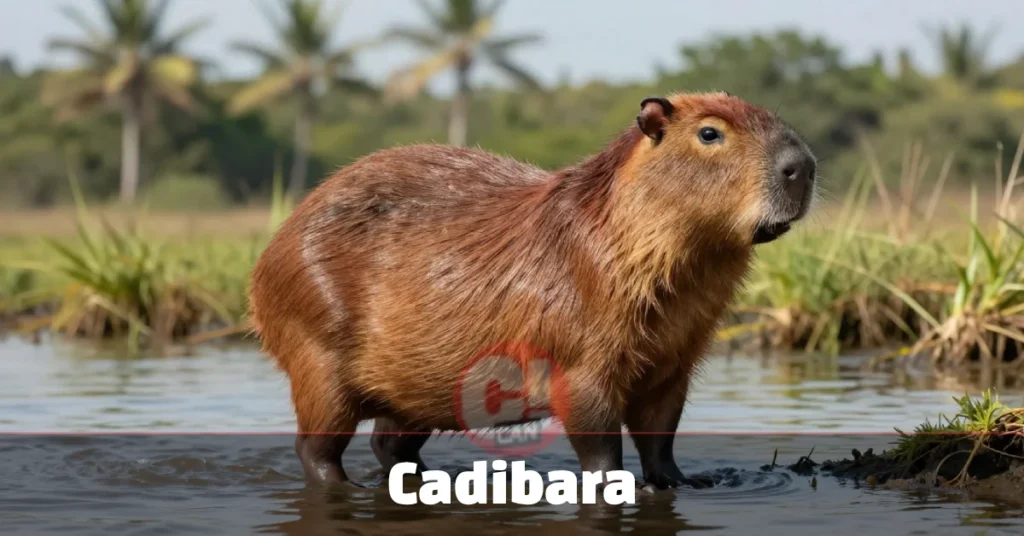
The cadibara (Hydrochoerus hydrochaeris) is Earth’s largest living rodent, native to South American wetlands. These semi-aquatic mammals weigh 77–176 pounds and measure up to 4.2 feet long. Highly social herbivores, cadibaras live in groups of 10–20 individuals near rivers and swamps, where they graze on grasses and aquatic plants while remaining alert for predators like jaguars and caimans.
When you scroll through social media, you’ve probably seen a cadibara lounging by water with birds perched on its back or soaking in a hot spring. These massive rodents have become internet sensations, but there’s far more to them than viral moments. The cadibara represents one of nature’s most successful large rodents—a creature that’s perfectly built for its wetland home and lives a lifestyle completely foreign to most animals.
Unlike their tiny cousins (mice and rats), cadibaras are barrel-shaped giants weighing as much as a full-grown human. They’re not aggressive or territorial like many large mammals. Instead, they’re peaceful herbivores that prefer spending their days grazing, swimming, and socializing with their herds. Understanding what makes the cadibara tick—from its physical design to its complex social world—reveals why this animal has captured hearts globally and why protecting its habitat matters so much for South American ecosystems.
What Is a Cadibara?
The cadibara belongs to the rodent family Caviidae, making it a distant relative of guinea pigs and rock cavies. Its scientific name, Hydrochoerus hydrochaeris, breaks down into Greek roots: “hydro” (water) and “choerus” (pig), literally meaning “water pig.” This name perfectly captures the animal’s semi-aquatic nature.
An adult cadibara measures between 3.5 and 4.2 feet long and stands roughly 20–24 inches tall at the shoulder. Their barrel-shaped bodies are covered in coarse, sparse fur that ranges from reddish-brown on top to yellowish-brown underneath. One striking feature is their sweat glands, which sit on the surface of their skin—an unusual adaptation among rodents. Their feet are partially webbed, their legs are short but muscular, and their tails are barely visible. This compact, sturdy build makes them ideal for navigating muddy riverbanks and shallow water.
Their blunt snouts house nostrils positioned high on their heads, and their eyes and ears sit even higher. This arrangement allows cadibaras to remain mostly submerged while still seeing, hearing, and breathing. They’ve evolved the body of a water specialist, though they remain comfortable both in and out of water.
Where Cadibaras Live: Habitat and Geography
Cadibaras inhabit South America exclusively, spanning from Panama through the Amazon basin down to Argentina and Uruguay. Their range includes Brazil, Colombia, Venezuela, Peru, Bolivia, and Paraguay. These countries contain the vast wetland systems the cadibara needs to survive.
Cadibaras favor lowland areas with permanent or seasonal water sources. They thrive near rivers, lakes, swamps, marshes, and flooded grasslands where aquatic vegetation grows abundantly. Water isn’t optional for cadibaras—it’s essential. They use water for drinking, feeding, cooling off during heat, escaping predators, and mating. During dry seasons, cadibaras congregate in massive herds around shrinking water sources. You might find 50 to 100 individuals gathered at a single pond or river bend during drought periods. When rains return and water spreads across the landscape, these herds scatter into smaller groups to exploit newly available grazing areas.
The presence of cadibaras shapes their habitat in important ways. Their grazing controls invasive aquatic plants, their movements create trails other animals follow, and their bodies provide food for apex predators. Losing cadibaras would disrupt wetland ecosystems in ways scientists are still fully understanding.
The Social World of Cadibaras
Here’s where cadibaras truly stand out: they’re intensely social creatures. Unlike solitary rodents, cadibaras rarely live alone. Instead, they form structured family groups typically containing 10–20 members. These herds include one dominant male, several females with their young, and subordinate males. The dominant male manages the group, settles conflicts, and defends the territory. Females are generally more cooperative than males, sometimes even nursing each other’s calves.
These animals constantly communicate through a rich vocabulary of sounds. They purr softly when content, bark when alarmed, whistle to stay connected, squeal in distress, and chatter their teeth when anxious. Each sound serves a purpose—maintaining group cohesion, signaling danger, or establishing relationships. Living in a cadibara group means never being truly alone. Members spend hours grooming each other, resting in tight clusters, and moving together as a unit.
What’s remarkable is their tolerance toward other species. Cattle egrets, ducks, and other birds regularly perch on cadibara backs without fear. Monkeys share watering holes peacefully. This coexistence likely benefits everyone—birds remove parasites from the cadibara’s fur while gaining insects and parasites as food. It’s a natural partnership that shows just how mild-mannered these giant rodents really are.
Diet and Digestive System
Cadibaras are strict herbivores consuming 6–8 pounds of vegetation daily. They graze primarily on grasses but also eat aquatic plants, shrubs, and water plants. Their front teeth grow continuously, which they naturally wear down through constant grazing. This dental adaptation works perfectly for a creature that spends much of its day eating.
Here’s where cadibaras get genuinely unusual: they practice coprophagy—consuming their own feces. This sounds strange, but it’s actually brilliant. Their digestive system produces feces rich in gut bacteria and nutrients after the first pass. By eating these feces, cadibaras essentially double-digest their food, extracting maximum protein, vitamins, and minerals from tough plant material. This adaptation allows them to survive on grasses alone, which most mammals couldn’t manage.
Cadibaras adjust their diet seasonally. During rainy seasons when fresh grasses flourish, they’re pure grazers. When dry seasons arrive, and grasses become scarce, they shift to reeds, grains, and whatever vegetation remains available. This flexibility helped them spread across diverse South American habitats. Unfortunately, it also made them agricultural pests in some regions, where they’ve been known to raid melon and squash crops.
Swimming and Water Behavior
Cadibaras are exceptional swimmers despite their stocky build. Their webbed feet and streamlined bodies make them far more graceful in water than on land. They can hold their breath underwater for up to five minutes, which helps them escape predators and locate food sources on the water floor.
Water plays a central role in cadibara reproduction. Mating occurs exclusively in water, where females can accept or refuse males by diving or surfacing at will. Mothers often give birth while partially submerged. Young cadibaras are born precocial, meaning they’re relatively mature at birth. They can stand, walk, and begin grazing within their first week of life.
Conservation Status and Future
Cadibaras currently rank as “Least Concern” on the IUCN Red List, meaning they’re not globally endangered. However, regional populations face real threats. Habitat destruction through wetland conversion for agriculture and cattle ranching removes critical water sources. Hunting for meat, hides, and skin grease continues in some areas. Farmers sometimes kill cadibaras, believing they destroy crops, though they cause less damage than commonly assumed.
In parts of South America, cadibara farming for commercial leather and meat production is legal and regulated. Indigenous communities have sustainably used cadibaras for centuries. The key to their long-term survival is balancing human needs with habitat protection and implementing hunting quotas that prevent overexploitation.
Conclusion
The cadibara represents one of South America’s most successful large rodents and an ambassador for wetland conservation. From their specialized swimming abilities to their complex social hierarchies and unique digestion strategies, cadibaras showcase nature’s incredible variety. Their gentle temperament and peaceful coexistence with other species demonstrate that size doesn’t require aggression. As cadibaras continue capturing global attention through viral videos and memes, understanding their real biology, behavior, and conservation needs becomes increasingly important. Protecting the cadibara populations means protecting the South American wetlands that countless other species depend on.